

Let’s talk



So here’s the question: will AI follow the same fate? Will it be another promise that dazzles executives in presentations but disappoints in execution?
History says yes, unless we approach it differently. The truth is that every major technology wave has faced the same pattern:
Initially, it was more of a curiosity than a utility. Businesses invested in electric lighting before the infrastructure and practical applications existed.
Early machines were expensive, complex, and underutilized. Few imagined the desktop revolution.
The promise was efficiency and insight, but complexity, poor change management, and unrealistic expectations doomed most projects.
The pattern is clear: technology alone does not equal value. Value emerges when infrastructure, culture, and processes evolve alongside the tool. AI will be no different.
When you look at the adoption curves of revolutionary technologies, one thing becomes obvious: slow adoption is normal, not failure.
Take electricity, for example. Invented in the late 19th century, it wasn’t until the 1920s that 50% of U.S. households had electric power. Thirty years of infrastructure building, standardization, and experimentation were required before the benefits became undeniable. Early critics called it “a luxury with no practical purpose.”
Similarly, the personal computer, which today seems indispensable, followed a decades-long path. Early adopters bought machines that were expensive, fragile, and difficult to use. Many companies tried to sell them, but most failed. Only after the ecosystem matured, operating systems stabilized, software proliferated, and users learned how to leverage them, did PCs become ubiquitous.
Here’s a visual way to think about it:
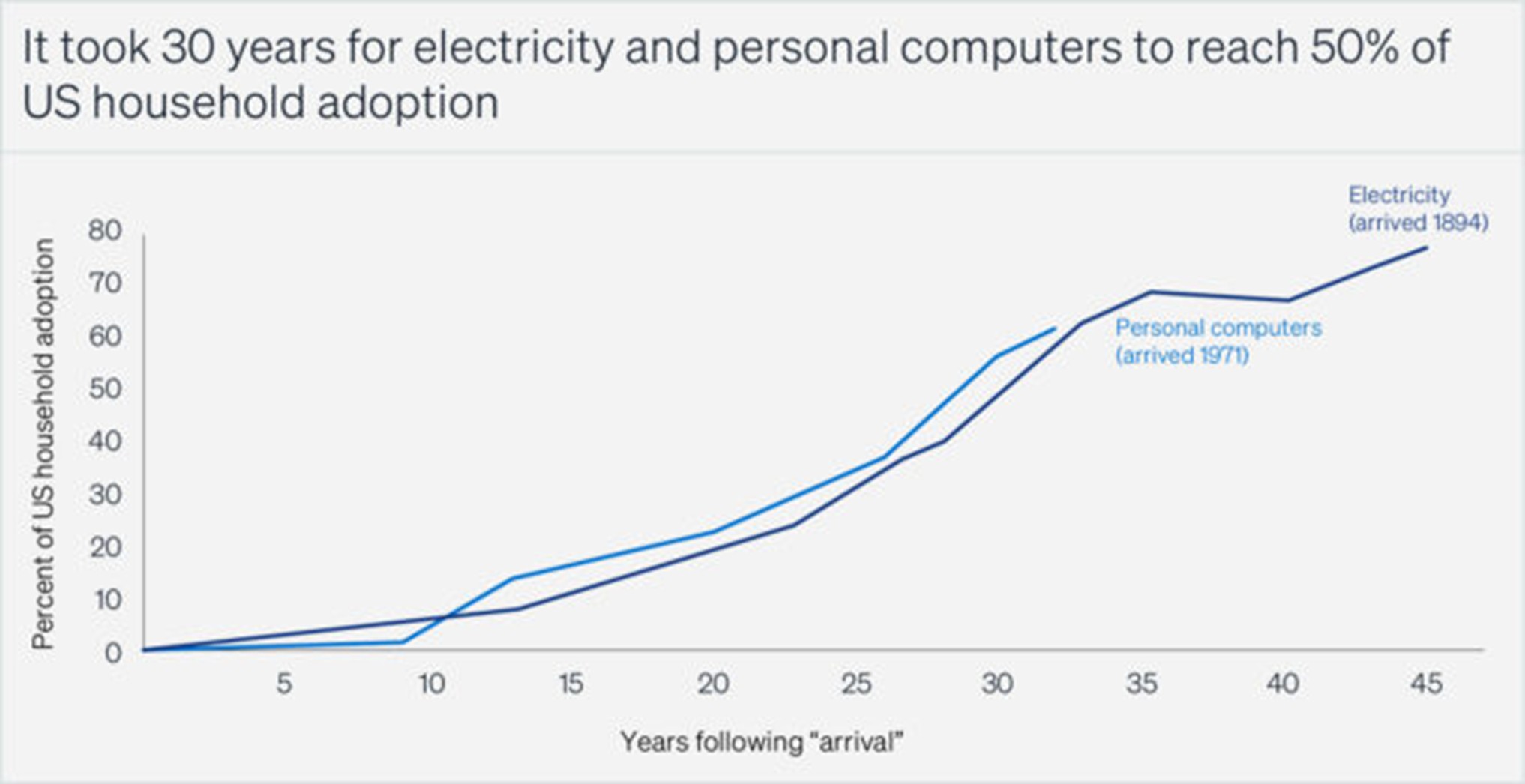
Even game-changing inventions take decades to deliver widespread, measurable value. The lesson is clear: value compounds slowly, and only after the surrounding infrastructure, user behavior, and cultural readiness catch up.
For AI, this means that the tools alone won’t create immediate results. Companies rushing to deploy large language models or predictive analytics without preparing workflows, governance, and change management are repeating the mistakes of ERP adopters from 20 years ago.
Thomas Edison faced skepticism in the 1880s when he tried to electrify New York City. Critics argued, “Who needs electricity when gas works fine?” Only after incremental improvements, pilot projects, and long-term investments did the full economic and social value of electricity become clear.
Despite the hype and massive investments, the sobering truth is that AI projects fail at rates that exceed ERP implementations. Understanding why is critical for anyone trying to avoid the same pitfalls. Let’s break down the five most common causes:
Executives often envision overnight transformation: instant insights, immediate cost reductions, or magical automation. Reality, as ERP veterans can attest, is far slower. AI requires proper workflows, integration, and iterative learning before it delivers meaningful results.
Garbage in, garbage out. ERP systems failed when master data was inconsistent, incomplete, or siloed. AI is even more sensitive: models trained on bad data yield misleading insights, amplifying risk rather than reducing it.
Many companies attempt to automate existing processes without questioning whether those processes are efficient. AI simply makes a flawed process faster; it doesn’t make it smarter. Transformation requires redesign, not replication.
“AI belongs to IT” is a familiar refrain. Just as ERP failures often stemmed from business leaders abdicating responsibility, AI projects flounder when cross-functional teams and executives don’t own outcomes. Technology is a tool; business leaders must guide its use.
Once an ERP system went live, some companies treated it as “done.” AI, too, requires ongoing optimization, monitoring, and evolution. Models degrade over time, business priorities shift, and continuous learning is essential to extract sustained value.
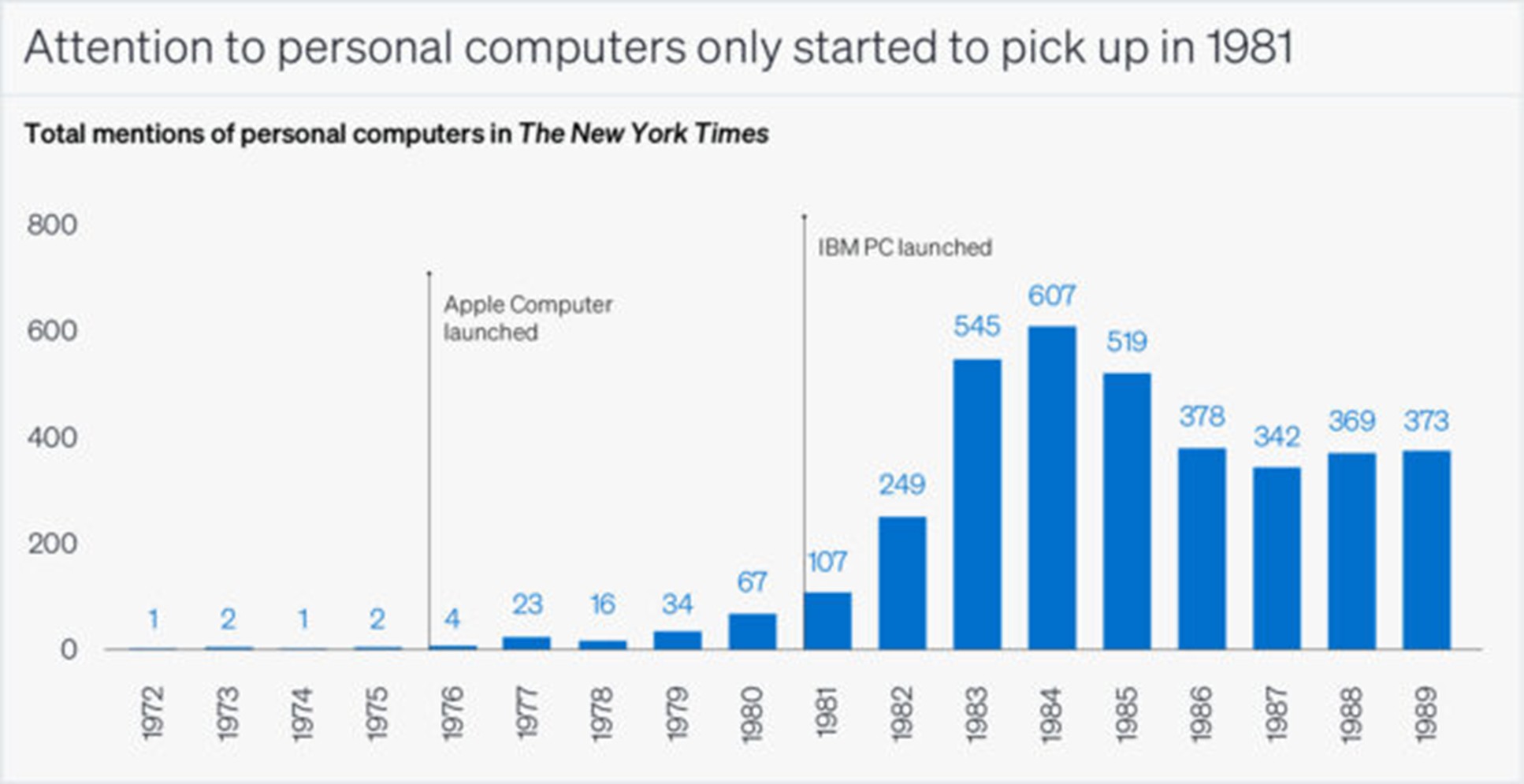
If we’ve learned anything from the history of computing, it’s that media hype rarely matches real adoption.
AI is following the same trajectory today:
1. Media coverage is at an all-time high. Headlines claim AI will replace jobs, reinvent industries, and generate trillions in value.
2. Yet studies show that 50–60% of companies have no clear AI use case or strategy in place. Furthermore, around 90% of AI implementations fail to have a positive ROI.
3. Productivity gains are often slow to materialize; research indicates that the measurable impact of AI lags well behind initial expectations.
The lesson is simple: awareness is not adoption. The “AI gold rush” is largely exploratory. Firms are experimenting, learning, and figuring out what actually moves the needle.
So how do some companies avoid the pitfalls that sink most ERP and AI projects? The answer is surprisingly consistent: they follow a disciplined framework that emphasizes design, data, and discipline.
Redesign workflows with intelligence in mind, not just automation. Identify where AI can enhance decision-making rather than merely speed up a task. For example, instead of automating an inefficient approval process, rethink how approvals are structured and how decision criteria are applied.
Invest in clean, integrated data layers. AI thrives on quality data from ERP, CRM, operations, and external sources. Without a strong data foundation, AI insights will be unreliable, undermining trust and adoption.
Build cross-functional teams that own results—not just tools. IT, operations, finance, and business units must collaborate on model governance, KPI tracking, and iterative improvement. AI is not a “set it and forget it” initiative. Winners treat it as a continuous capability.
The lesson is simple: success isn’t about chasing every shiny technology or launching half-baked projects. It’s about creating systems, workflows, and strategies that actually deliver measurable value over the long term.
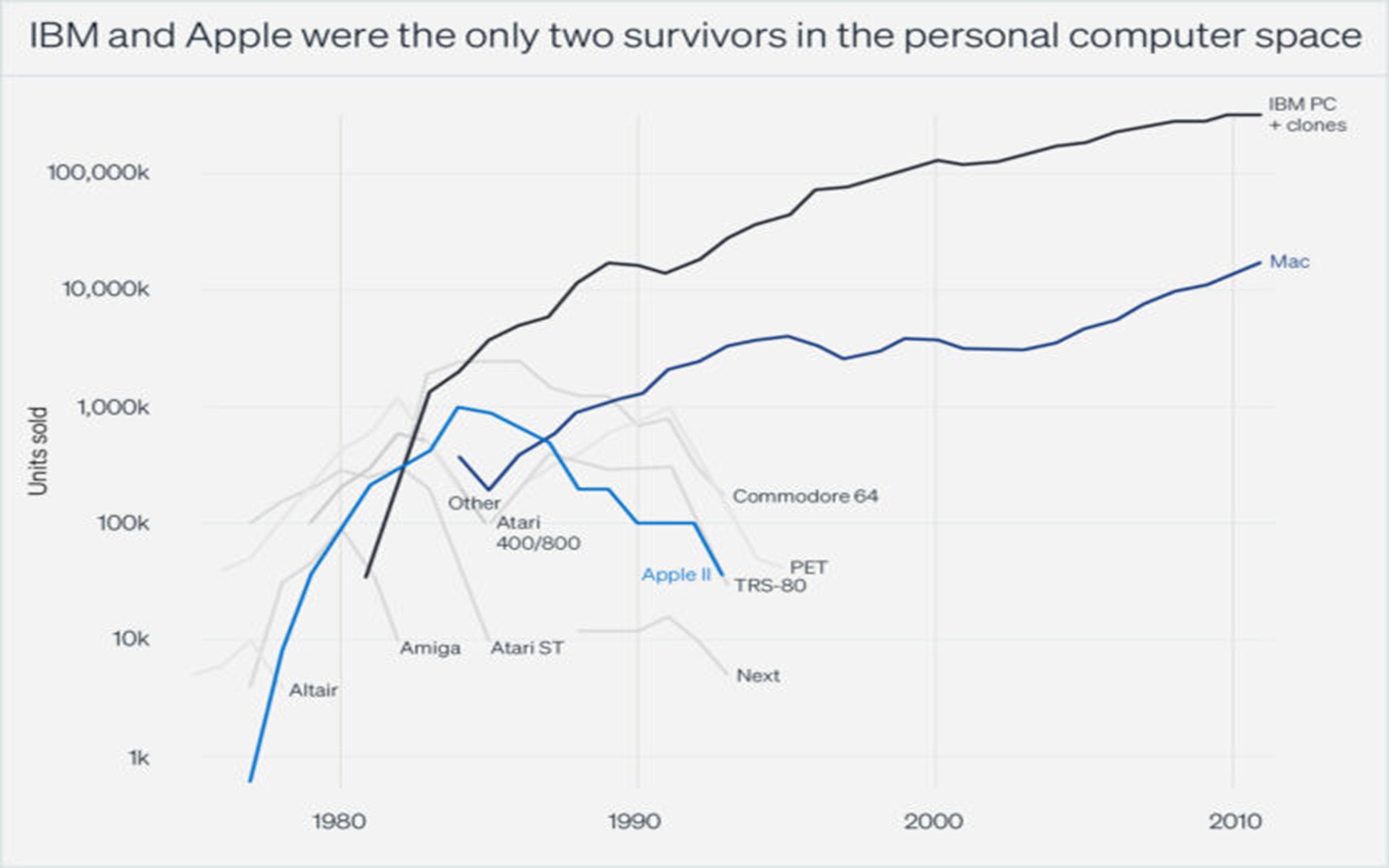
For AI, the story is already repeating. Many startups and internal projects will fade. Only those that combine usability, integration, and clear business outcomes will stand the test of time. If you want to win, aim to be one of the survivors.